
Early Childhood Safe Spaces After Hurricane Melissa in Jamaica
Hurricane Melissa made landfall in Jamaica on 28/10 as a Category 5 hurricane, bringing widespread flooding and powerful winds across extensive regions. Homes were destroyed, essential services disrupted, and many communities cut off.
According to OCHA, at least 1.5 million have been affected across Jamaica alone.
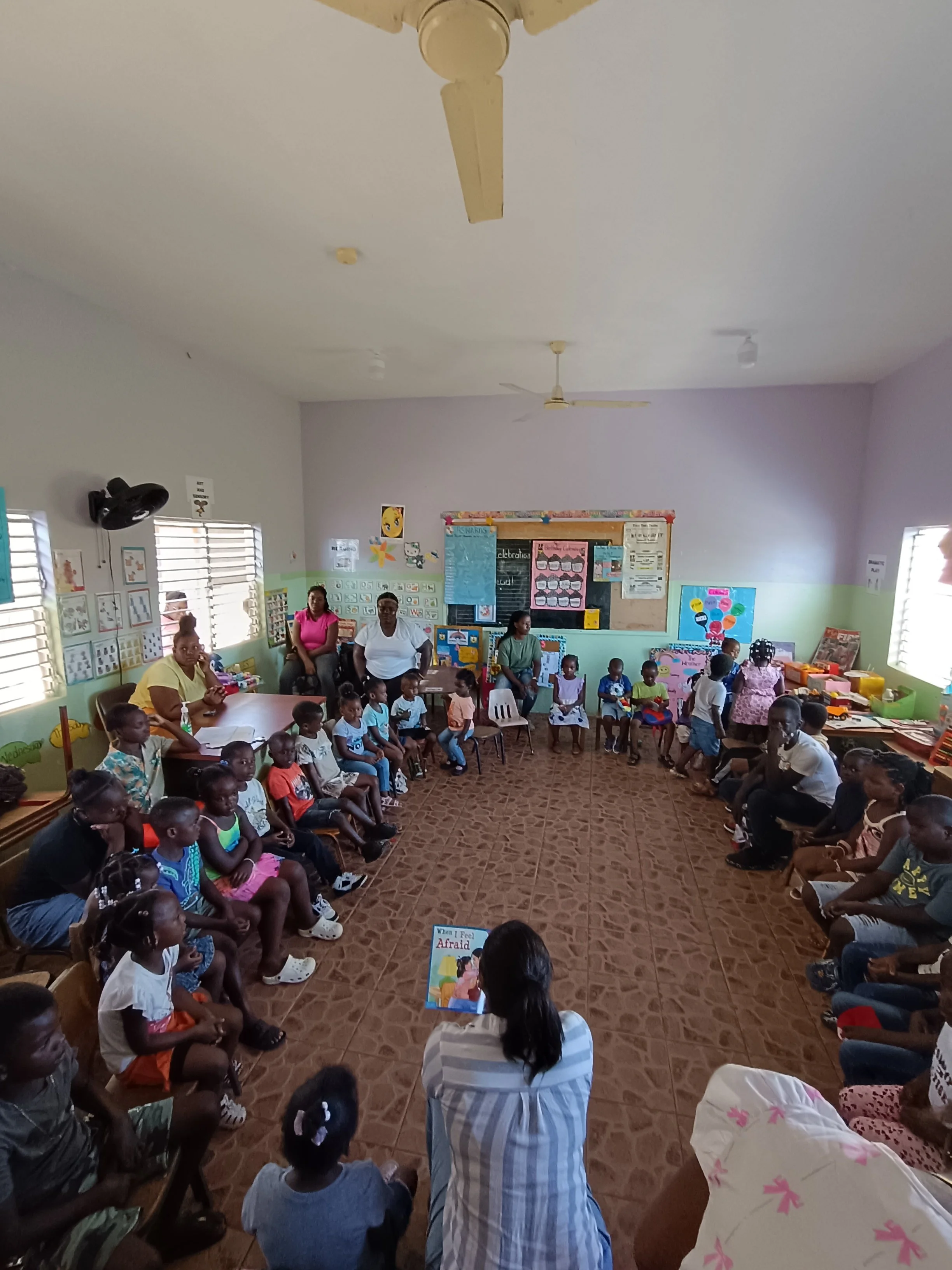
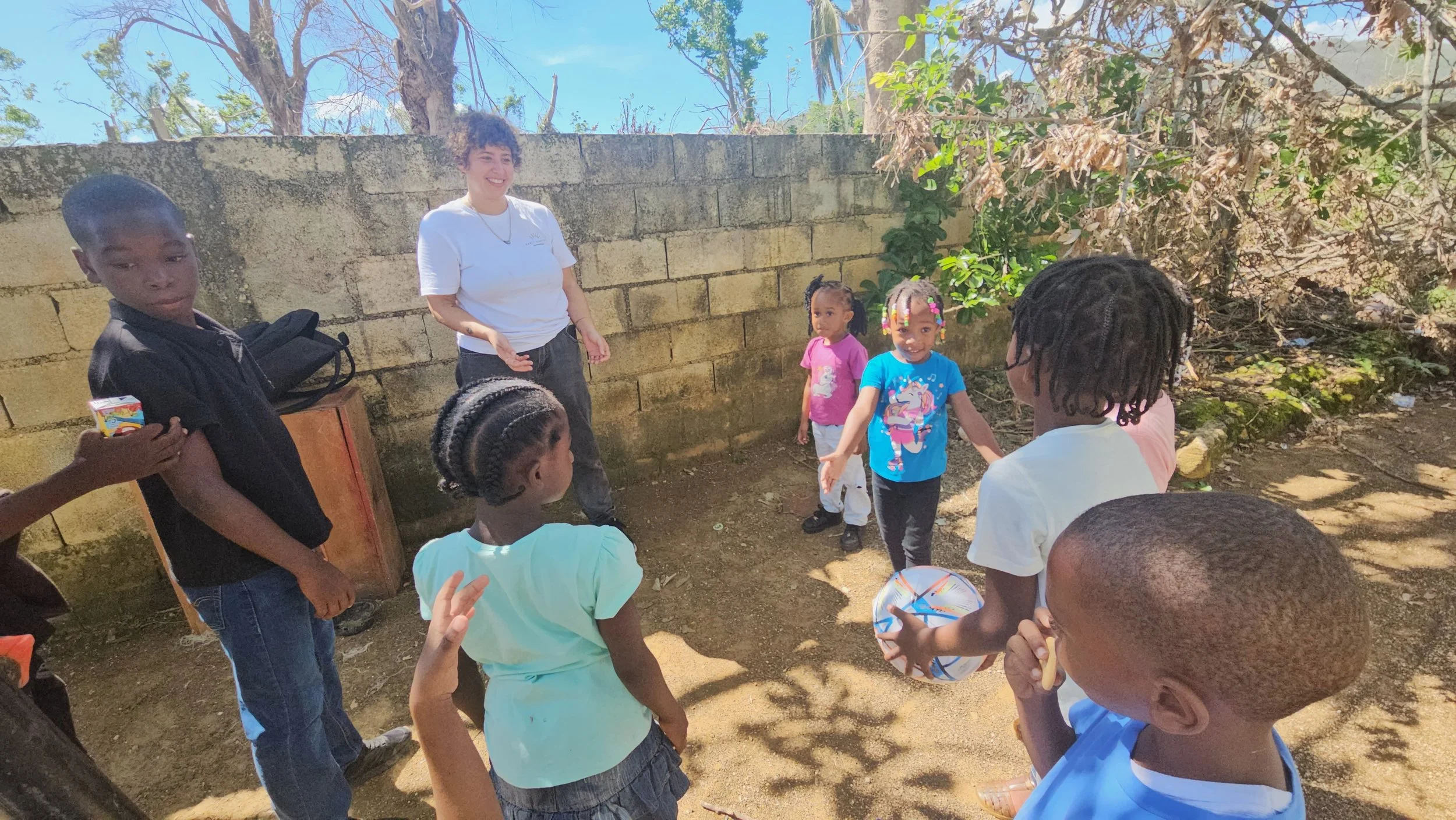
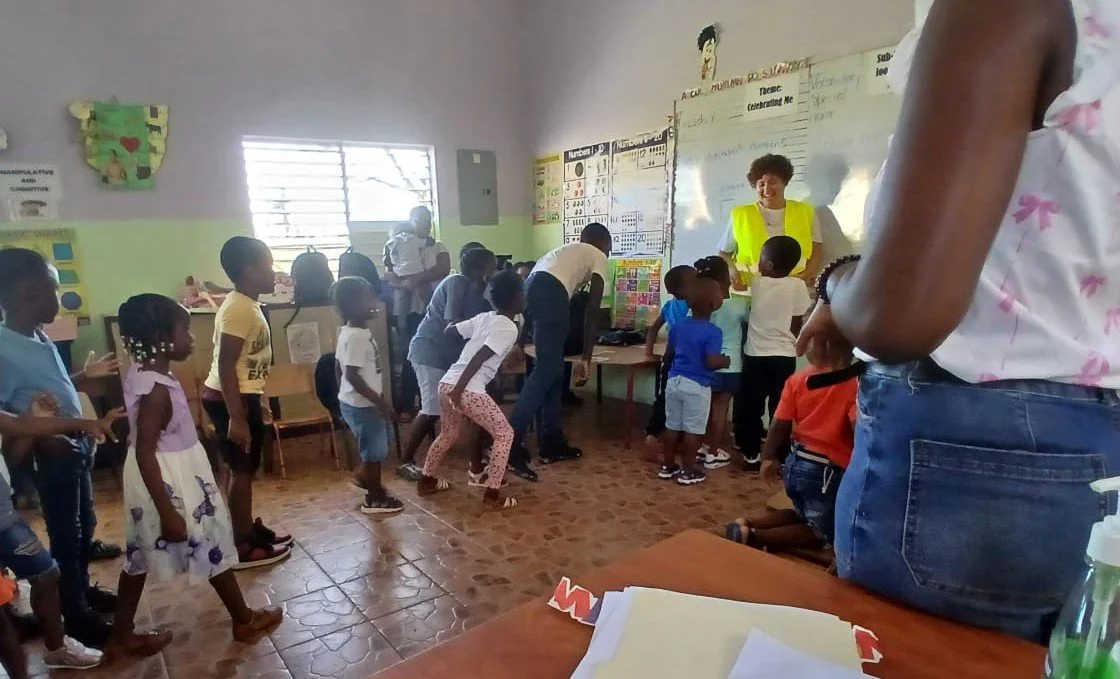
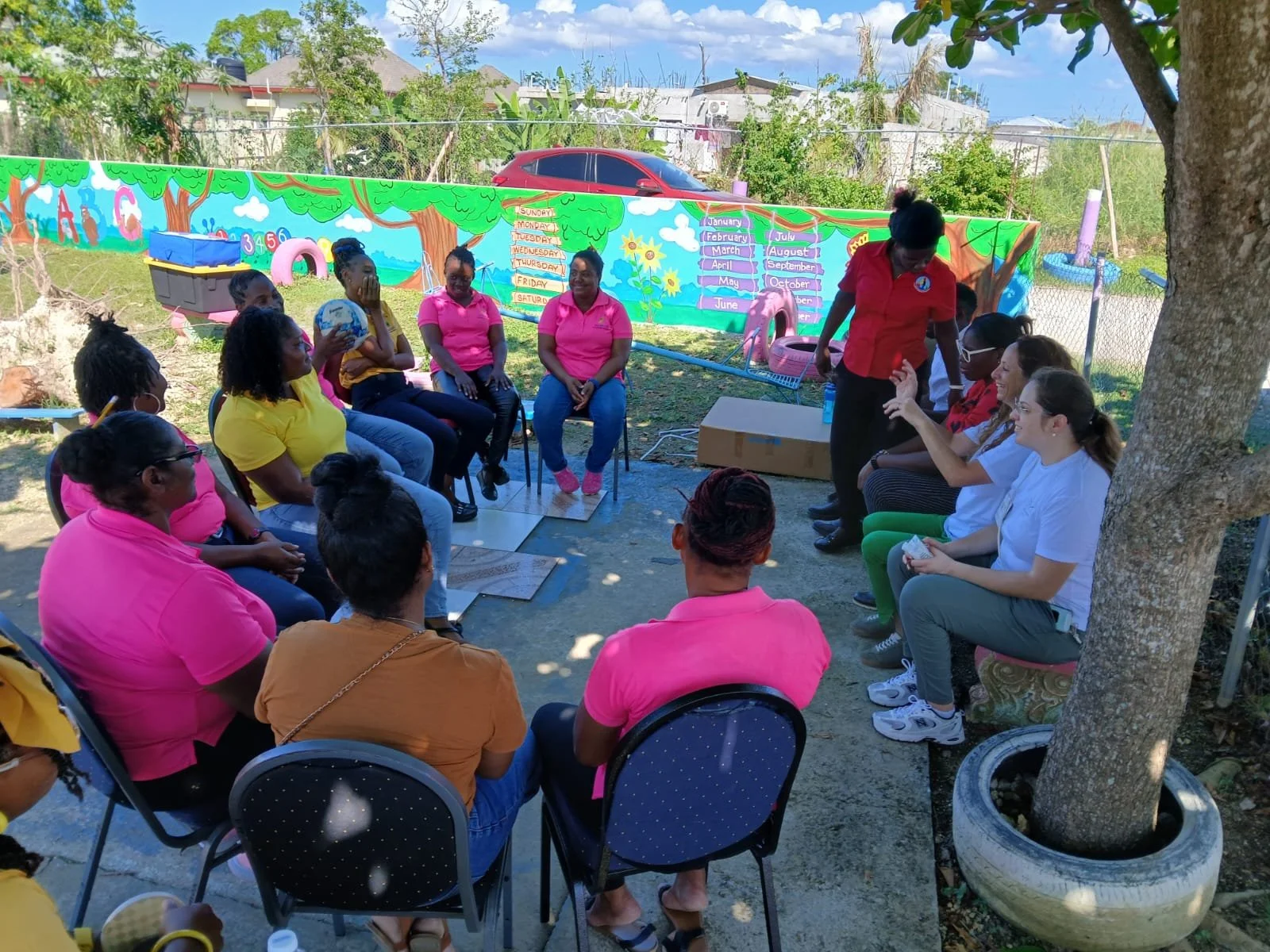
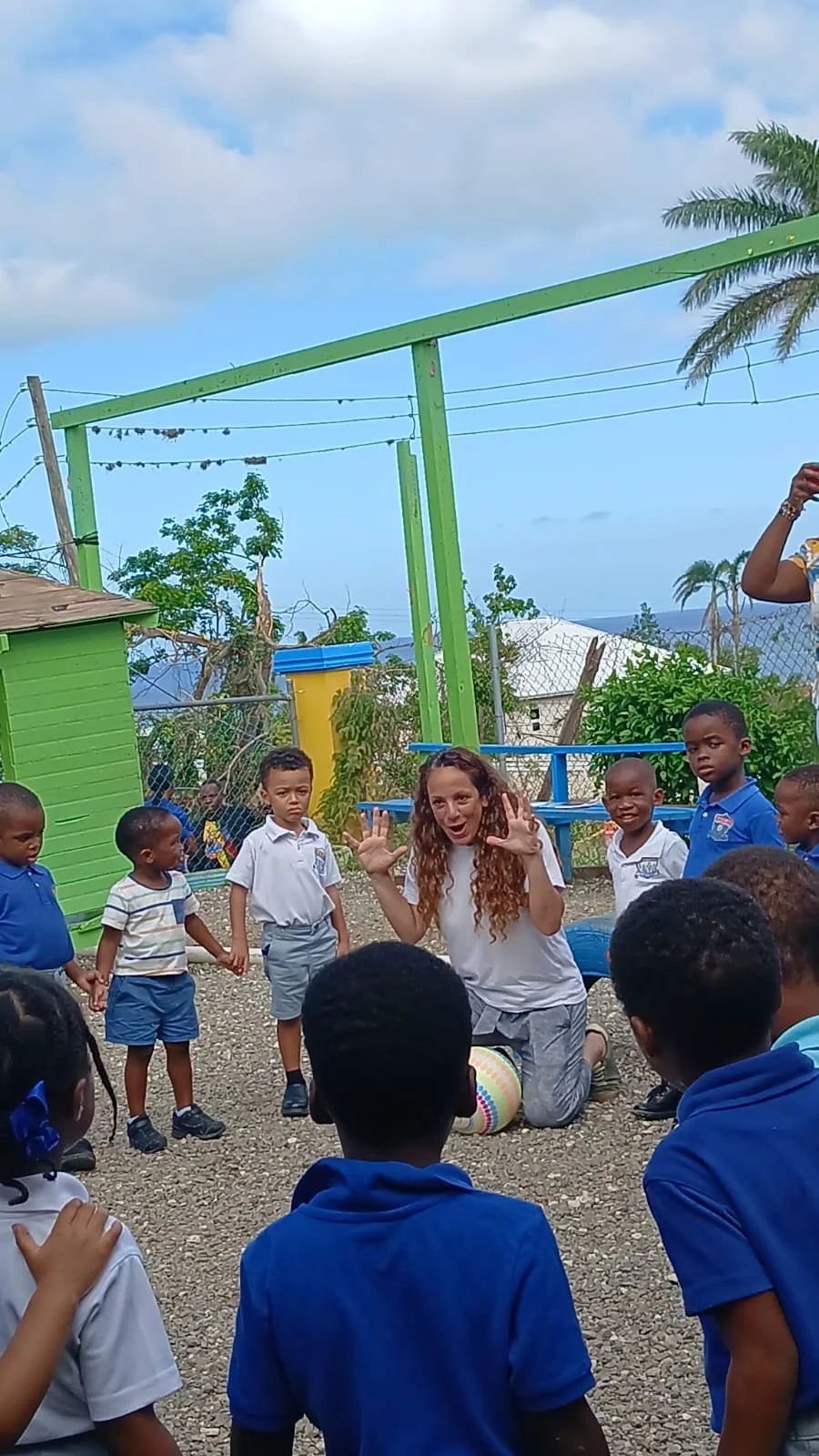
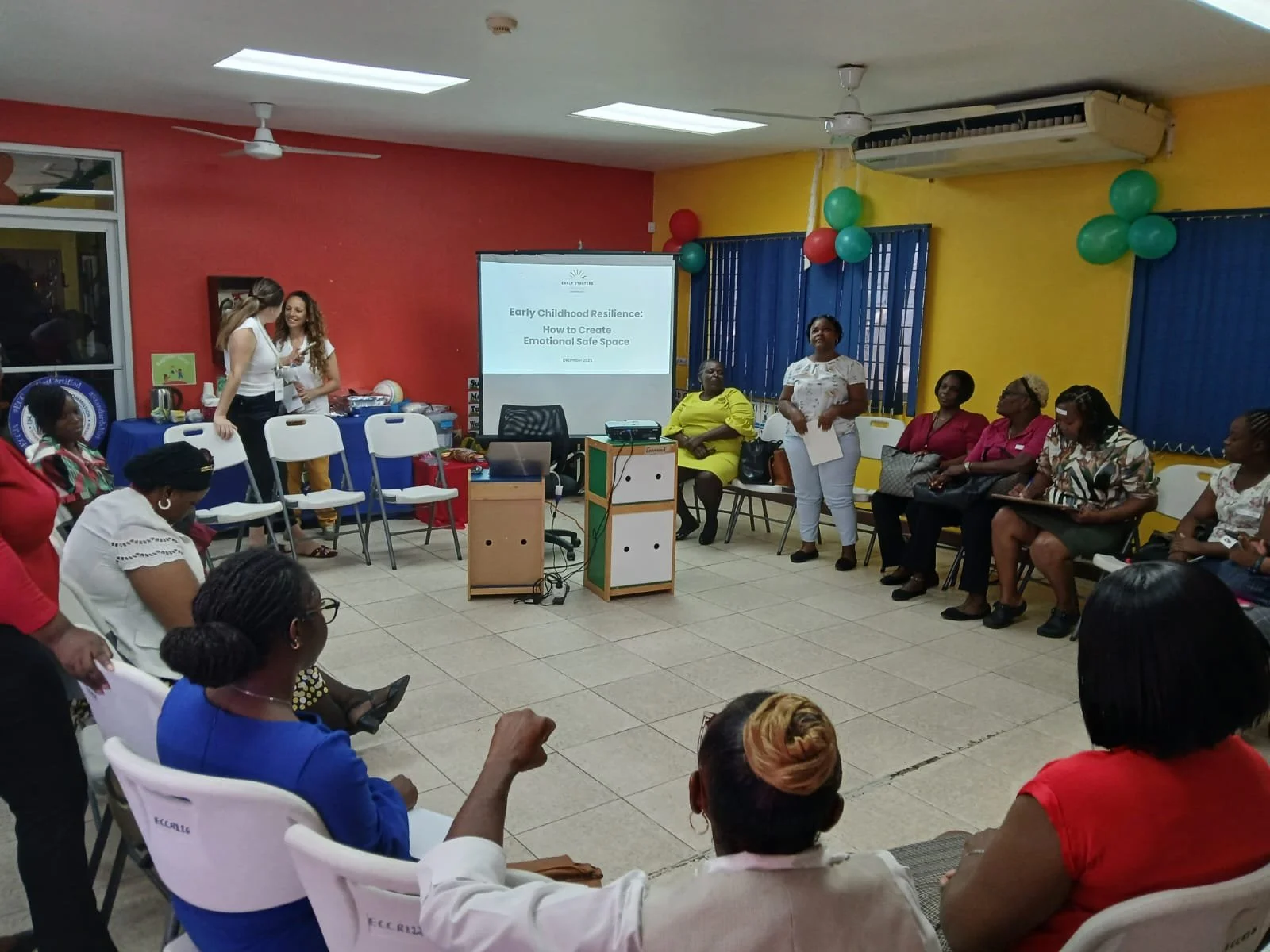
Since arriving in Jamaica, ESI has been actively working alongside national and local partners to support young children and early childhood professionals in communities affected by the hurricane. In close collaboration with the Early Childhood Commission (ECC) and UNICEF, we have delivered play-based and resilience-building activities for young children across multiple locations in the most impacted parishes, reaching hundreds of children. Each field activity was accompanied by structured integration sessions with the educational teams of the facilities, strengthening local capacity and embedding trauma-informed practices into daily routines.
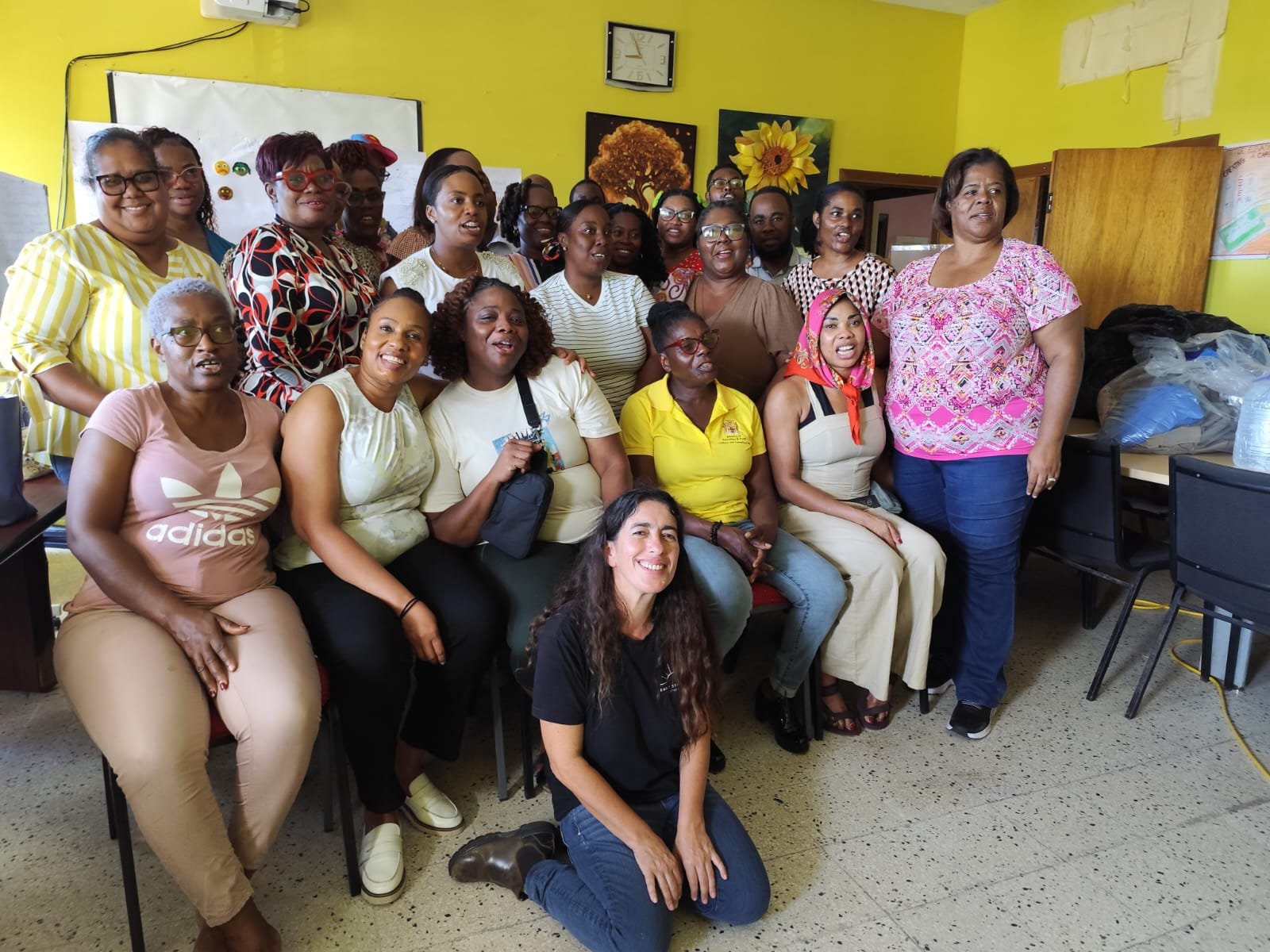
In parallel, we have trained ECC field officers, trained teachers and practitioners in trauma-informed education and practical resilience-building methodologies, equipping them with tools to respond not only to disaster-related stress but also to ongoing community challenges. We also developed an Emergency Relief Response Manual — a field-ready guide designed to support children’s emotional regulation under crisis conditions. Additionally, we facilitated dedicated support and training sessions with the National Education Trust (NET) and the Guidance and Counselling Unit, working directly with educators in several ECIs.
Impact in numbers:
● at least 1,100 Children reached
● 850 Early Childhood professionals trained
● worked across 7 affected parishes
● Emergency Relief Response Manual distributed to 1,000+ educators
Through this work on the ground, it became increasingly clear that the hurricane did not create trauma in isolation, but rather intensified pre-existing realities of violence and social challenges already present in many communities. Our experience, combined with the deep local knowledge and commitment of our Jamaican partners, has demonstrated the urgent need for a structured, long-term response. We strongly believe that this partnership can help children, families, and educational teams not only recover from this crisis, but emerge with greater resilience, stronger protective systems, and renewed hope for the future.